Durango Commercial Real Estate 2026 Market Outlook
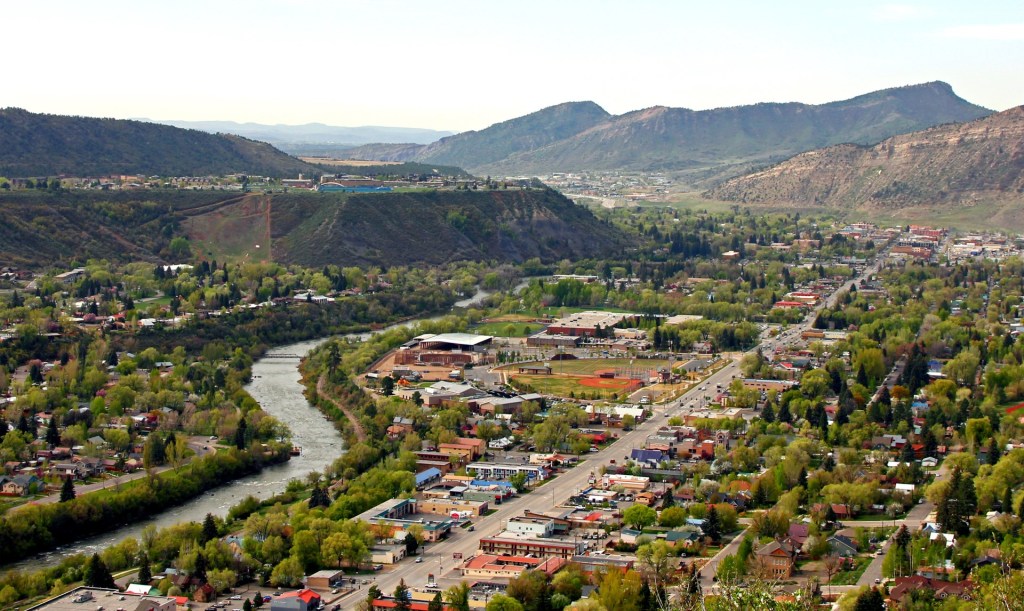
Durango’s commercial real estate market enters 2026 with cautious optimism, positioned between the post-pandemic boom and a more balanced, sustainable growth trajectory. While the broader Colorado tourism economy faces headwinds, Durango’s year-round diversified economy and status as the economic hub of Southwest Colorado provide resilience that pure resort towns lack.
This market outlook forecasts modest but steady growth across commercial sectors in 2026, with investment opportunities emerging for informed buyers who understand Durango’s unique market dynamics. Unlike seasonal ski towns experiencing declining tourism revenues, Durango benefits from multiple economic drivers including Fort Lewis College, Mercy Hospital, outdoor recreation, and the historic Durango & Silverton Narrow Gauge Railroad.
Key Market Indicators at a Glance
The following metrics provide a snapshot of Durango’s commercial real estate fundamentals entering 2026:
| Indicator | 2026 Outlook |
| Population | ~19,300 (stable growth) |
| Median Household Income | $79,545 |
| Tourism Employment Share | 25% of total jobs (~6,000 positions) |
| Cap Rates (Established Properties) | 5-7% range |
| Commercial Price Range | $175K – $7M+ (typical) |
| Tourist Economic Impact | $28 per tourist dollar spent |
Economic Fundamentals
Colorado’s Economic Backdrop
Colorado’s economy is projected to grow 2.9% in 2026, outpacing national growth of 2.1%. However, employment growth remains sluggish at just 0.6%, or approximately 17,500 net new jobs statewide. This disconnect between GDP growth and job creation reflects structural shifts in the economy, including automation and labor constraints from baby boomer retirements.
For commercial real estate investors, the key takeaway is that Colorado’s economic expansion will be driven more by productivity and income growth than by expanding workforce participation. This favors quality properties in established markets like Durango over speculative plays in unproven locations.
Tourism: Navigating Headwinds
Colorado’s mountain resort communities are experiencing a tourism recalibration after unprecedented pandemic-era growth. Sales tax revenues in towns like Breckenridge are projected to decline 3% in 2026, while Vail anticipates a 6.8% decline from 2024 levels. The lack of snow early in the 2025-26 winter season has further stressed ski-dependent economies, with booking pace down 25% year-over-year.
Durango, however, demonstrates relative resilience:
• Year-round tourism model: Unlike pure ski towns, Durango attracts visitors in all seasons through the Durango & Silverton Narrow Gauge Railroad, world-class mountain biking, river rafting, and fall foliage.
• Drive market dominance: Most Durango visitors arrive by car from nearby regions (New Mexico, Arizona, Denver, Colorado Springs), insulating the market from airline travel volatility.
• Airport growth: Durango-La Plata County Airport saw 13% passenger growth in early 2025, significantly outpacing national trends.
• Economic diversification: Tourism represents one-third of Durango’s economy, not the entirety—providing stability when visitor numbers fluctuate.
Inflation and Interest Rate Outlook
Inflation in the Denver-Aurora-Lakewood metro area averaged 2.3% in 2025 and is projected to rise to 3.5% statewide in 2026, driven in part by new tariffs increasing the effective rate on Colorado imports from 3% to 21%. This inflation will pressure both operating costs and consumer spending power.
The Federal Reserve is expected to cut rates twice in 2026, with the 10-year Treasury yield remaining relatively stable. For commercial real estate, this creates a more favorable financing environment than 2024-2025, though borrowing costs remain elevated compared to the 2010-2021 period. Buyers with strong balance sheets and existing banking relationships will have a competitive advantage.
Commercial Sectors Outlook
Office: Quality Over Quantity
National office vacancy peaked at 20.5% in Q4 2025, with downtown Denver reaching 26.3%. However, Durango’s office market operates on different fundamentals:
• Small business economy: Durango’s large population of small professional services firms (real estate, legal, medical, tourism operators) creates steady demand for Class B and C office space in the $20-25/sq ft range.
• Limited new supply: Unlike Denver, Durango has minimal spec office construction, preventing the oversupply crisis affecting major metros.
• Main Avenue premium: Historic downtown office space commands premium rents due to location prestige and tourist traffic visibility.
2026 Forecast: Stable occupancy for well-maintained properties. Cap rates for quality office assets should remain in the 5-7% range. Investors should focus on properties with long-term tenants and avoid older buildings requiring significant capital improvements without corresponding rent upside.
Retail: The Main Avenue Advantage
While retail faces structural headwinds nationally, Durango’s Main Avenue Historic District defies trends. This Nationally Registered Historic District benefits from year-round tourist traffic, creating a retail environment more resilient than typical suburban strip centers.
Key dynamics:
• Tourist retail (51% of art gallery/live performance purchases from visitors)
• Experiential retail focus (restaurants, breweries, galleries) less vulnerable to e-commerce
• Limited inventory creates pricing power for prime locations
Colorado Springs retail vacancy is just 5.9%, demonstrating strong fundamentals for secondary markets. Durango should track similarly, though precise vacancy data requires assessment from local assessor surveys.
2026 Forecast: Retail properties on Main Avenue will remain highly competitive. Neighborhood retail centers serving local populations (groceries, services) should see steady demand. Triple-net lease retail with established tenants offers attractive risk-adjusted returns in the 5-7% cap rate range.
Industrial: The Scarcity Premium
Industrial space represents Durango’s tightest commercial sector. As of 2024, industrial space remains extremely limited whether leasing or purchasing, according to local market participants. The town of Mancos (15 miles west) hosts the only light industrial zoned building in that market—a 30,000+ square foot warehouse facility—demonstrating regional scarcity.
Market characteristics:
• Limited zoned land: Topography and zoning restrictions prevent significant new industrial development
• Animas Air Park: Primary industrial location, offering proximity to airport and highway access
• Service business demand: Contractors, equipment rental, manufacturing support businesses drive demand
Denver industrial vacancy stands at 7.6% with negative absorption in 2024-2025, but Durango’s constrained supply dynamic differs markedly. Small bay properties (under 10,000 sq ft) remain in particularly high demand with listing durations typically under 5 months.
2026 Forecast: Industrial properties that come to market will likely transact quickly at premium valuations. Investors with industrial holdings should consider long-term holds. New industrial development pencils for owner-users but remains challenging for speculative development due to land costs and zoning constraints.
Mixed-Use and Hospitality
Mixed-use properties—particularly those combining ground-floor retail with upper-floor office or residential—offer compelling risk mitigation. If ground-floor restaurant tenants struggle during slower winter months, upper-floor office tenants provide income stability.
Hospitality properties (hotels, bed & breakfasts, short-term rentals) can generate substantial returns but require active management and capital reserves for maintenance. Mountain weather accelerates building deterioration, making thorough inspections critical. Properties with existing 5-year triple-net leases to established operators offer passive investment alternatives.
2026 Forecast: Mixed-use properties will command premium valuations due to diversification benefits. Hospitality assets may see compression as tourism moderation impacts revenue forecasts, creating selective opportunities for experienced operators willing to add value through improvements.
Investment Strategies for 2026
The Value-Add Opportunity
CBRE’s national outlook emphasizes that total returns in 2026 will be income-driven rather than appreciation-driven, with asset enhancement as a key differentiator. This thesis applies directly to Durango:
• Cosmetic upgrades: Updating older buildings with modern finishes, improved energy efficiency, and enhanced curb appeal can justify meaningful rent increases
• Repositioning opportunities: Converting underutilized spaces (vacant upper floors, storage areas) into income-producing units
• Long-term lease execution: Properties with month-to-month or short-term leases can be stabilized through lease restructuring and tenant quality improvement
Investors should focus on properties trading at 7-9% cap rates where operational improvements can drive NOI growth of 15-25%, creating significant value even without market appreciation.
1031 Exchange Considerations
Colorado offers favorable 1031 exchange opportunities with no state-level restrictions beyond federal requirements. Durango properties offer several advantages for exchangers:
• Replacement property scarcity: Limited inventory supports stable-to-appreciating values over exchange holding periods
• Strong fundamentals: Diversified economy reduces risk of significant value deterioration
• Lifestyle component: Owner-users can enjoy mountain town living while building equity
Investors selling Denver-area properties may find Durango’s lower acquisition costs (relative to metro markets) create opportunities to purchase debt-free or acquire multiple properties, reducing leverage risk in a higher interest rate environment.
Tax Strategies: Property Tax Relief and Enterprise Zones
Colorado’s property tax landscape is improving for commercial owners:
• Assessment rate reductions: Commercial assessment rates are dropping from 29% (2024) to 27% (2025), 26% (2026), and 25% (2027), providing cumulative tax relief
• Enterprise Zone credits: La Plata County contains Enterprise Zone areas offering a 3% state income tax credit on qualified investments
These tax advantages improve cash-on-cash returns and should be factored into underwriting models when comparing Durango investments to other markets.
Risks and Challenges
Wildfire Risk
Southwest Colorado faces elevated wildfire risk, particularly in dry springs and early summers. Wildfires below 8,500 feet elevation could significantly impact tourism-dependent businesses if smoke blankets the region during peak season.
Investors should:
• Verify adequate insurance coverage and understand policy limitations
• Consider wildfire mitigation measures for properties in interface zones
• Underwrite tourism-dependent properties conservatively, assuming potential revenue disruption
Climate and Seasonal Variability
The 2025-26 winter season’s lack of snowfall demonstrates Durango’s vulnerability to climate variability despite its year-round tourism model. Purgatory Resort area properties particularly depend on winter sports, and snowless winters compress this revenue stream.
Investors should favor properties serving the broader Durango economy over those exclusively dependent on skiing. The town’s increasing focus on summer and shoulder season activities (mountain biking, trail development) helps mitigate this risk long-term.
Affordability and Workforce Housing
La Plata County residential real estate remains expensive, with in-town Durango median prices around $885,000 for single-family homes. This affordability challenge stresses the workforce supporting commercial businesses. The tight labor market may limit business expansion and tenant growth.
Commercial investors should monitor workforce housing initiatives—including the Downtown Denver Authority model being discussed locally—as successful affordable housing development could unlock commercial expansion by alleviating labor constraints.
Conclusion: Cautiously Optimistic
Durango’s commercial real estate market enters 2026 from a position of relative strength compared to peer mountain communities. The combination of economic diversification, year-round tourism, constrained supply (particularly industrial), and declining property tax rates creates an environment favoring patient, informed investors.
Key themes for 2026:
1. Income over appreciation: Focus on stable cash flow from quality tenants rather than speculative appreciation plays
2. Scarcity creates value: Limited industrial inventory and constrained development will support pricing power
3. Location, location, location: Main Avenue and in-town properties will outperform rural or secondary locations
4. Active management pays: Value-add opportunities through repositioning and operational improvements offer the best risk-adjusted returns
5. Diversification matters: Mixed-use properties reduce tenant concentration risk
While challenges exist—tourism headwinds, wildfire risk, workforce constraints—Durango’s fundamental characteristics support a stable, investable commercial real estate market in 2026. Investors who understand the market’s unique dynamics and focus on well-located, cash-flowing assets should achieve satisfactory risk-adjusted returns even in a moderate growth environment.
About the Author
Justin Osborn is a commercial real estate broker with Wells Group Real Estate and Rocky Mountain Commercial Real Estate (RMCRE), specializing in Southwest Colorado markets. A 21-year veteran of the Durango real estate market, Justin has consistently ranked as a top producer in both transaction volume and deals closed in the region.
Justin holds a degree in Business Administration with an emphasis in Marketing and a minor in Agribusiness from Fort Lewis College. He serves on the board of Rio Rapids Durango Soccer Club and is a past president of the Durango High Noon Rotary Club. He was awarded Volunteer of the Year by both the Durango Area Association of Realtors and The Wells Group, and was a top nominee for Volunteer of the Year with the Durango Chamber of Commerce.
For commercial real estate opportunities in Durango and La Plata County, contact Justin at justin@wellsgroupdurango.com or (970) 259-6680.
Disclaimer: This market outlook is provided for informational purposes only and does not constitute investment, legal, or tax advice. Commercial real estate investments involve risk, including possible loss of principal. Past performance does not guarantee future results. Investors should conduct their own due diligence and consult with qualified professionals before making investment decisions. Market data and projections are based on publicly available sources and author analysis as of January 2026 and are subject to change.